Telecommunications: Power to the People?
- test: test
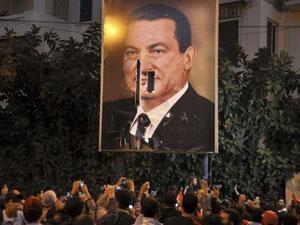
A major sea change could be descending upon the Arab world. After the ousting of the Tunisian President Zine al-Abidine Ben Ali following nationwide organised protests, Egypt’s citizens have united to demand that their entrenched President, Hosni Mubarak, follow suit...
A major sea change could be descending upon the Arab world. After the ousting of the Tunisian President Zine al-Abidine Ben Ali following nationwide organised protests, Egypt’s citizens have united to demand that their entrenched President, Hosni Mubarak, follow suit.
The spirit of revolution is spreading throughout the Arab world with reports of protests in Jordan and Lebanon, and as the global media makes comparisons to the fall of the Berlin Wall, so too do they begin to analyse how these protests came to be.
Of course, much has changed across the world since the collapse of Communism in Germany over 20 years ago, not least of which is the mass proliferation of communications technology. The past two decades have witnessed the rise of the Internet and mobile phones, allowing people to connect with everyone in their lives no matter how far apart they are.
Telecommunications have fundamentally changed the way that we interact with each other, so the major role played by them in the organisation of the protests sweeping the Arab world comes as no surprise.
During initial wave of Tunisian protests, expressions of solidarity were made via social networking sites such as Facebook, but it was in the organisation of the first Egyptian protests that the powerful role that social media would play in these events truly became apparent.
The protests themselves are believed to have been instigated by a Youtube video calling for action; this spread via social media and resulted in a spate of protests being organised nationwide, largely via Facebook and other social networking sites, with Twitter proving particularly popular for posting up-to-the-minute information as the protests progressed.
Coordinated protests began on January 25th, with thousands gathering in cities across Egypt, including Cairo, Alexandria, Suez and Ismaïlia. Three days later, ahead of large-scale planned protests, the government took action apparently aimed at preventing long-distance communication: internet services were shut down, and mobile operators were obliged to suspend services following a government order.
Although Saturday 29th January marked the day on which 80% of Egypt’s Internet access went dark, this was not the first move made by the government against telecommunications services. Shortly after the insurgency began, Mubarak had ordered that access to various social networking sites be suspended, directly acknowledging the role that such sites had played in the organisation of protests.
The government’s attempt to block access to telecommunications speaks volumes about how these services have become a part of everyday existence over recent years. After Egyptian state television and newspapers notoriously attempted to play down the initial wave of protests, any pretence of impartiality was shattered, dealing a blow to the credibility of state media and underlining the role of telecommunications in providing reliable information.
More than this though, the reaction indicated that Mubarak’s government was attempting to prevent the spread of information about the protests in a desperate bid to limit their impact – essentially a tacit acknowledgement of how powerful social media have become in their ability to connect and unify people.
Speaking about the situation in Egypt, Microsoft’s Bill Gates said: "Whenever you do something extraordinary like [shutting down the internet] you're sort of showing people you're afraid of the truth getting out, so it's a very difficult tactic.”
The government’s desperation is perhaps best reflected by the scope of the nationwide Internet embargo. A quote from the web traffic analysis firm Renesys explains the magnitude of the blockade: “Every Egyptian provider, every business, bank, Internet cafe, website, school, embassy, and government office that relied on the big four Egyptian ISPs for their Internet connectivity is now cut off from the rest of the world. Link Egypt, Vodafone/Raya, Telecom Egypt, Etisalat Misr, and all their customers and partners are, for the moment, off the air.”
At the time of writing, it appeared that Internet services were resuming in Egypt, but the Mubarak government’s internet embargo has highlighted the fact that telecommunications are now the world’s premier method of disseminating information.

James Barton
test copy
Related Articles


Bahrain looking to the future of 5G – R&M
Apr 24, 2020



Morocco leading the way in North Africa – R&M
Oct 17, 2019


Oman lined up for Middle East tech hub status – R&M
Sep 10, 2019


Prepaid reigns in Africa – R&M
May 10, 2019